

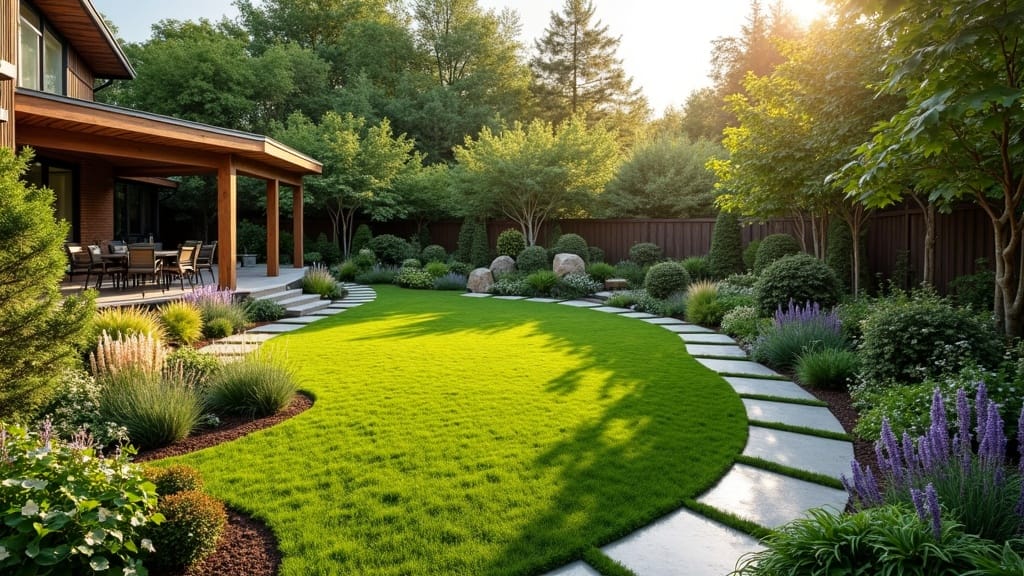
Garden design is the process of giving your outdoor space both function and character – from dividing it into zones, through choosing plants and materials, to the finishing details such as lighting and hardscaping. A well-designed garden is not only attractive but also comfortable to use and easy to maintain. In this guide you’ll learn how to plan your garden step by step, how to design a small front garden, which styles to choose, and how to preview the result before you plant a thing – thanks to AI visualisation.
Where to start with your garden design
Before you buy a single plant, analyse the space. This is the step that decides whether your garden will work for years to come:
- Measure the plot and sketch its shape and fixed elements (house, fence, existing trees).
- Check sun exposure – which areas are in full sun and which stay shaded most of the day.
- Identify your soil type (sandy, clay, loam) – it determines which plants will thrive.
- Define the functions – a seating area, terrace, barbecue spot, vegetable bed or play area.
Garden design step by step
- Divide the garden into zones – entrance and circulation, seating, utility and ornamental areas.
- Plan the pathways – routes that connect the zones, ideally at least 60–80 cm (2–2.5 ft) wide.
- Set a focal point – an ornamental tree, water feature, fire pit or a striking bed.
- Layer your plants – trees and tall shrubs at the back, perennials and grasses in the middle, ground covers at the front.
- Create a visualisation and compare a few variants before you start planting and buying materials.
Not sure which tool to use? See our overview of garden design software, and for inspiration browse these stunning front yard designs.
Small front garden design ideas
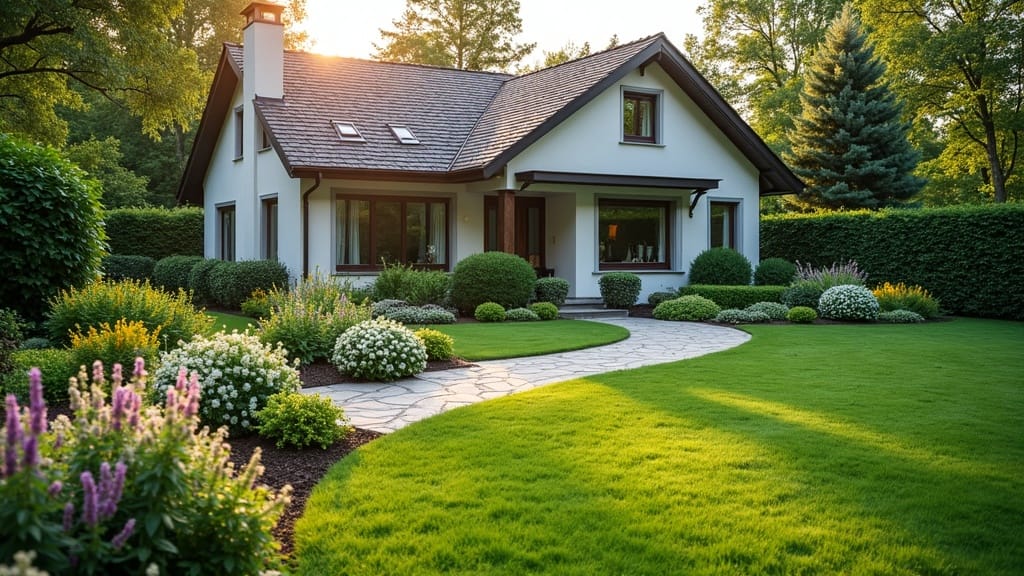
A small front garden is ruled by the law of minimalism – the less clutter, the bigger the sense of space. Here are proven principles (see also our small garden trends):
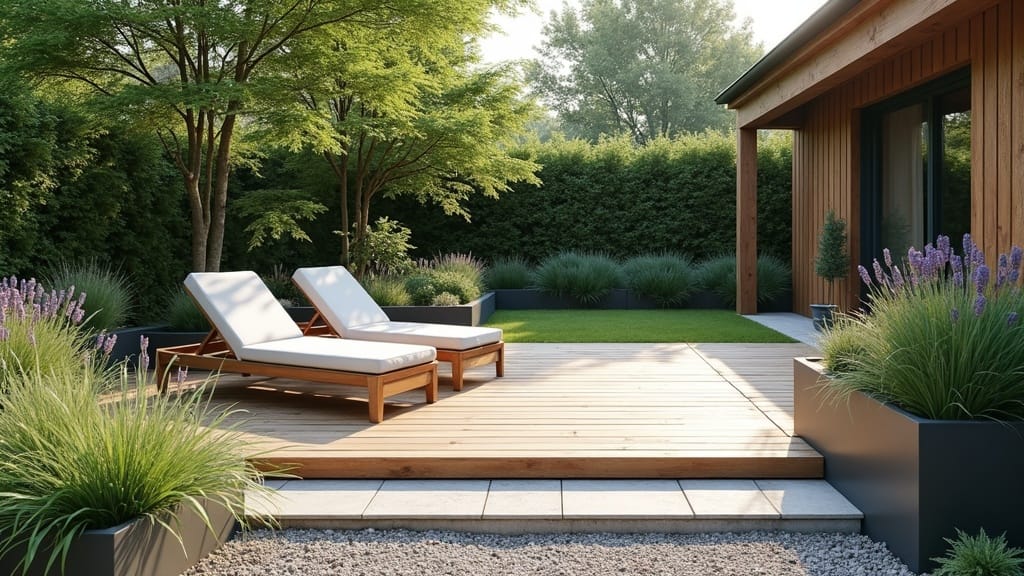
- Limit the palette to 3–4 colours and favour light tones – they visually enlarge the garden.
- Go vertical – climbers, narrow conifers and containers at different heights save ground space.
- Choose light surfaces – pale paving, white gravel and timber brighten the space.
- Use repeated plantings – a few species repeated in groups looks calmer than a collection of single plants.
Garden design styles
Choosing a style organises every later decision – from plants to materials. Below are the most popular directions, along with their defining features.
| Style | Defining features | Recommended plants | Materials |
|---|---|---|---|
| Modern / minimalist | Clean lines, geometry, limited palette | Ornamental grasses, boxwood, sedum | Concrete, Corten steel, pale paving |
| Naturalistic | Loose, “wild” plantings, meadow feel | Coneflowers, fountain grass, yarrow, perennials | Gravel, timber, natural stone |
| Cottage | Lush borders, romantic “messiness” | Lavender, hollyhocks, roses, phlox | Wooden fence, stone pathways |
| Mediterranean | Sunny, dry, plenty of containers | Olive, lavender, rosemary, grasses | Terracotta, pale stone, gravel |
| Scandinavian | Minimalism, natural materials, calm | Grasses, birches, evergreen shrubs | Light timber, white gravel |
| Japanese / Zen | Harmony, water, stone, asymmetry | Japanese maples, mosses, bamboo | Gravel, boulders, timber |
Plants, materials and hardscaping
A cohesive design rests on three pillars: plants, surfaces and hardscaping elements.
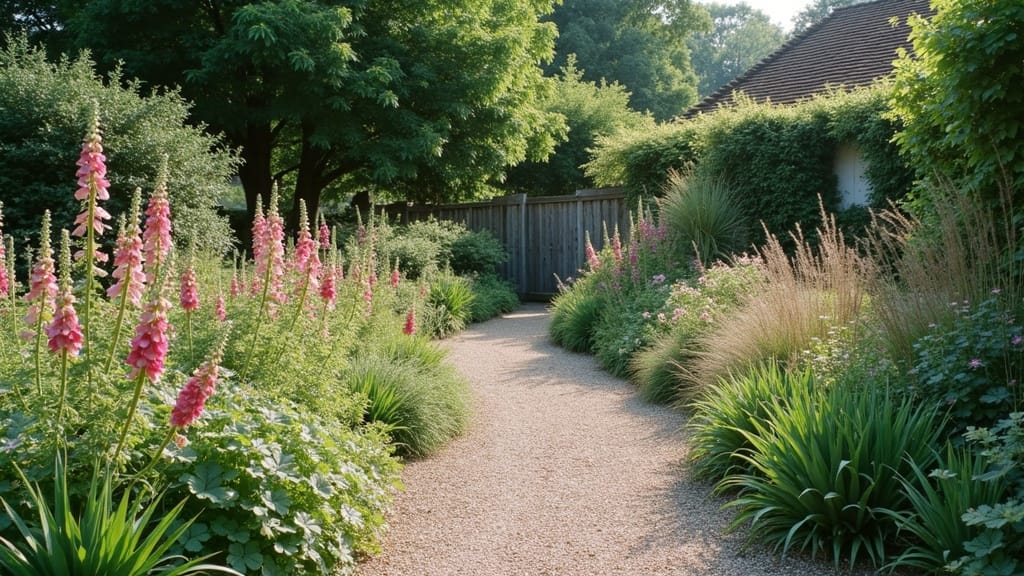
- Plants – combine perennials, ornamental grasses and evergreen shrubs so the garden stays decorative year-round. Low-maintenance choices include lavender, fountain grass, miscanthus, sedum and boxwood.
- Surfaces – pavers, natural stone, composite decking or gravel. Light materials enlarge the space visually; dark ones add elegance.
- Hardscaping – a terrace, pergola, LED lighting, water feature or fire pit. These give the garden its function and evening atmosphere.
Colour in garden design
Colour is the simplest tool for setting a mood. A reliable rule is 3–4 colours matched to your house facade and fence. Shades of white, purple and blue feel calm and bright, while yellow, red and orange add energy. In small gardens, stick to one cohesive palette; in larger ones you can give different zones their own colour character.
DIY garden design – plan it without an architect
Designing a garden yourself is possible even without any design background. The key is a solid zoning plan, plants suited to your site, and a visualisation of the result before you spend money. That way you avoid costly mistakes – like plants placed in the wrong spot or paving in a clashing colour. To see how AI changes this process, read about AI garden design online.
See your garden redesigned with AI
Ogrovision turns a photo of your garden into a realistic redesign in under a minute. Upload a snapshot, pick a style or describe your idea, and the AI generates a visualisation – so you can test several variants before planting anything. Your first project is free.
Frequently asked questions
Begin by analysing the space: measure the plot, check sun exposure and soil type, then map out zones (entrance, seating, terrace, vegetable bed). Only after that choose a style, plants and materials. Visualising the result before planting helps you avoid costly mistakes.
It depends on the size and scope. A landscape architect’s plan typically runs from a few hundred to a few thousand dollars, and installation from tens to hundreds per square metre. Designing it yourself with ready plants and AI visualisation limits the cost to materials and plants.
Keep it minimal: limit the palette to 3–4 colours, use light-coloured surfaces (pale paving, white gravel) and low, repeated plantings. Vertical accents (climbers, narrow conifers) and mirrored or glazed elements make the space feel larger.
Perennials and ornamental grasses (fountain grass, miscanthus, lavender, sedum) plus evergreen shrubs (boxwood, holly) need the least work. They stay decorative for most of the year and don’t require replanting each season.
Yes. All you need is a zoning plan, plants suited to your site and a visualisation of the result. AI tools such as Ogrovision generate a realistic design from a photo of your garden in under a minute, so you can test several styles before planting anything.