

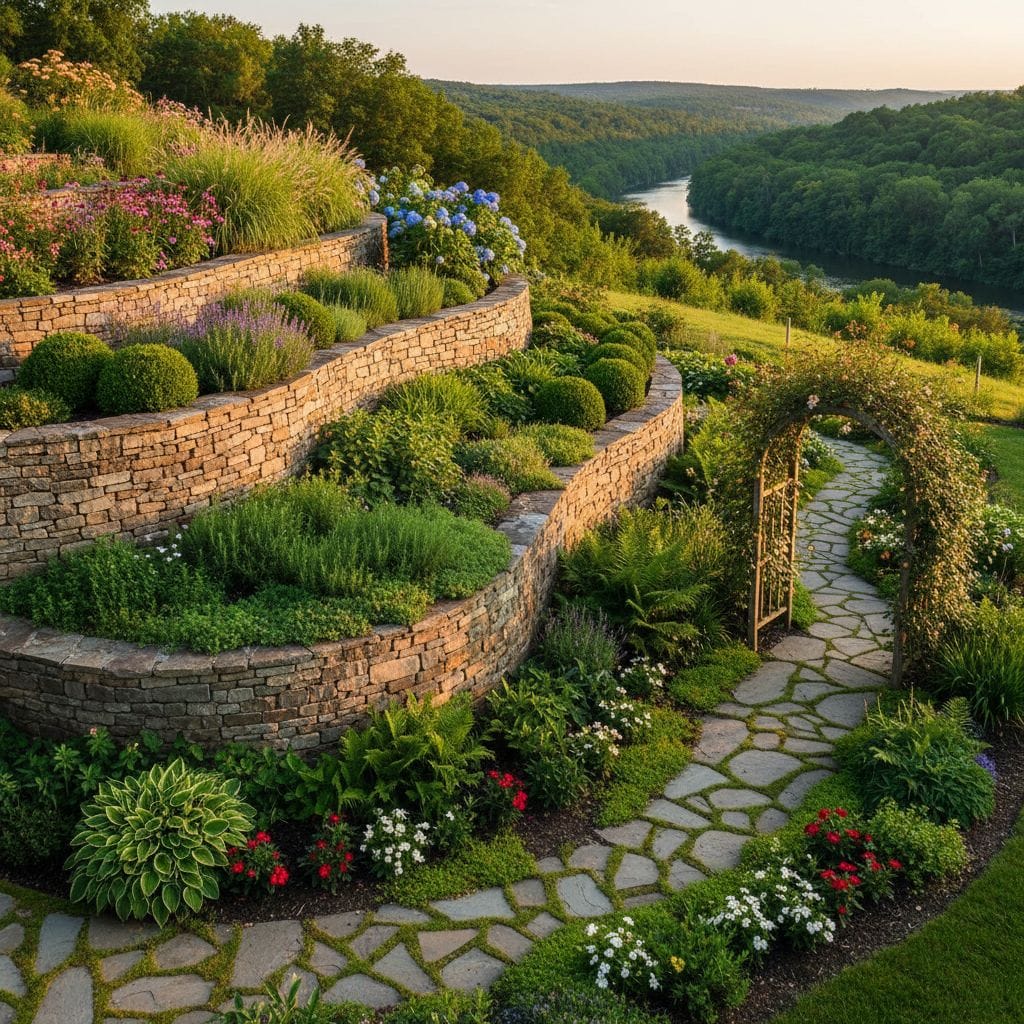
Stone retaining walls have been a favored element in garden design, not just for their rugged charm but also due to their practical benefits. Whether you’re working with a sloped yard or aiming to craft distinct garden levels, these walls serve as essential tools to manage soil and optimize space, all while adding visual depth to your landscape.
Building with Natural Stone: Function and Form
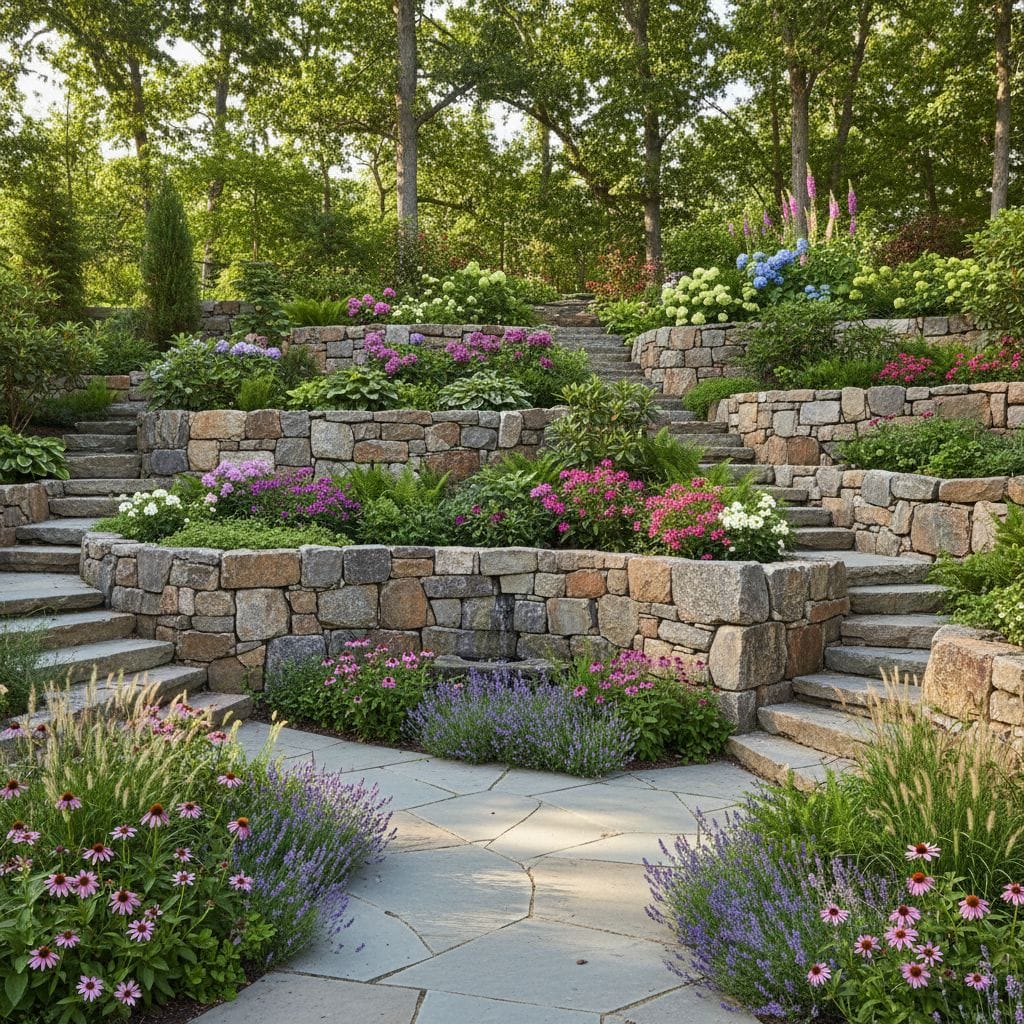
Retaining walls primarily function to prevent soil erosion, especially on uneven terrain. By creating terraces or flat areas, they make gardens more accessible and usable for patios, planting, or seating. Commonly, these walls are constructed from natural stones such as fieldstone, bluestone, limestone, flagstone, granite, sandstone, or even large boulders. Each type offers unique textures and colors that contribute to the garden’s overall character.
The design can lean towards dry-stacked stones, where no mortar is used, producing a rustic and organic look, or mortared stone walls for a more structured feel. For added stability and appeal, multi-tiered walls often include planting pockets filled with succulents, herbs, or ornamental grasses. These pockets enrich the structure both functionally and aesthetically, breaking up stone expanses with greenery.
To explore variety in appearance, combining different stone sizes, shapes, and colors enhances texture—think of irregular flagstones alongside neatly cut rectangular blocks. Staggering the courses helps improve stability, while applying landscape adhesive on the top row seals the finish without compromising the natural style.
Practical construction details like excavating a trench wider than the stone thickness and compacting crushed gravel as a base layer are crucial. Effective drainage behind the wall, achieved through 4-inch drain tile and geotextile fabric, protects the structure from freeze-thaw cycles that can cause damage. You’ll find concise guides on these techniques at Buechel Stone Blog and detailed material collections at Stones Direct.
Enhancing Garden Spaces with Stone Walls
Beyond their functional roles, stone retaining walls can define garden beds gracefully without obstructing sightlines. Low walls act like natural borders, subtly shaping spaces without imposing barriers. Additionally, features such as built-in steps, integrated seating, or even water elements can transform a wall from mere support to a focal point.
Design themes influence stone choices and wall configurations. For example, Mediterranean-style gardens might favor warm-toned limestone paired with wrought iron accents, while a modern rustic garden could use rough-cut granite seamlessly blending with wood elements. Some landscapers introduce gabion walls—wire cages filled with stones—for a contemporary edge or opt for reclaimed stone to suit budget-conscious or urban settings. Advice on customizing backyard layouts with multi-stone combinations and functional drainage is available at Poynter Landscape.
When dealing with steep slopes or soils like clay that retain moisture, professional engineering consultation is recommended. These conditions demand precise structural support to ensure durability and safety over time.
For those inspired to incorporate stone retaining walls into their garden, modern tools such as the platform available at AI Garden Design can assist in visualizing and planning complex landscaping projects tailored to your outdoor space.
Careful materials selection, solid foundations, and thoughtful design can help transform a garden with stone retaining walls into an inviting and stable environment, marrying functionality with natural beauty.
Sources used: Stones Direct, Buechel Stone Blog, Poynter Landscape, Hunter Springs Landscape.