

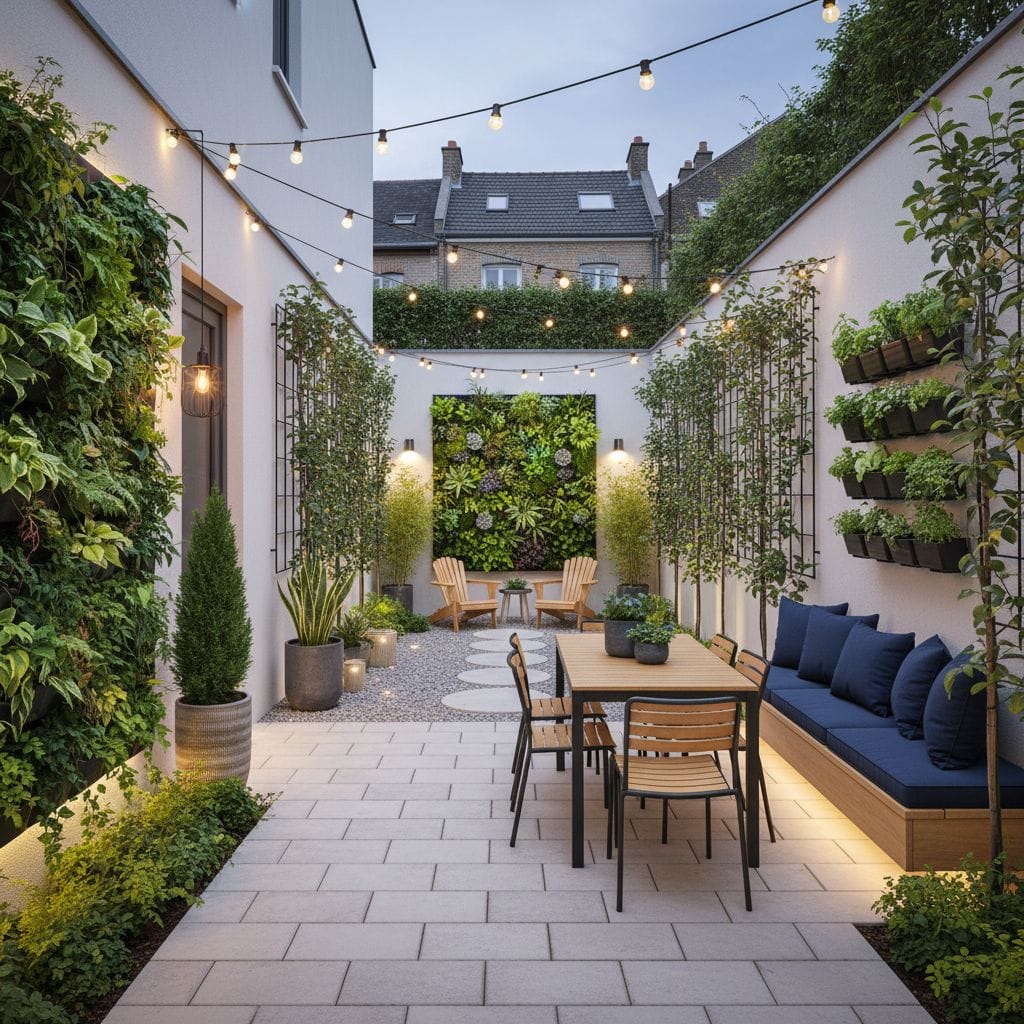
Narrow townhouse gardens, especially those under 50 square meters common in urban UK developments, present a unique set of challenges and opportunities for garden design. Their restricted width and proximity to neighboring houses often create shading issues and a corridor-like effect that can make the space feel cramped. Designing such gardens calls for creative solutions to maximize usability while enhancing visual appeal.
Creative Layouts and Spatial Division
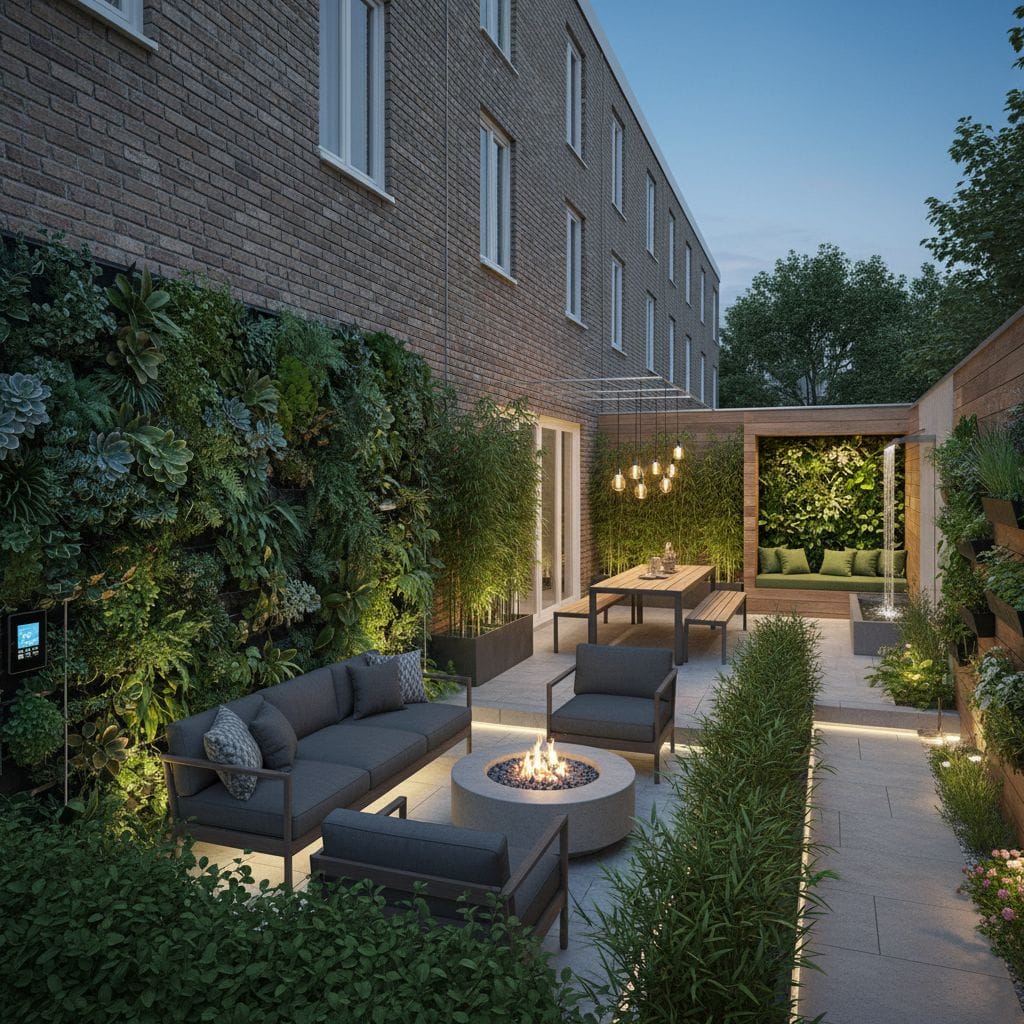
One effective way to combat the “tunnel” sensation in a narrow garden is to avoid long, straight paths that emphasize length without variation. Instead, zigzag or diagonal pathways introduce gentle breaks in the line of sight, widening the garden’s perceived space and slowing movement for a more leisurely experience. This design approach is supported by Bees Knees Gardening, which emphasizes the importance of varied routes and zones in maximizing enjoyment.
Breaking the garden into distinct functional zones—often referred to as the "Botanical Bento" layout—adds dimension and practical value. For instance, a calm Zen corner with sculptures, a herb-growing section, and a social patio can coexist within the compact footprint. This compartmentalization enhances both organization and aesthetic appeal without expanding the garden’s physical boundaries, a concept highlighted on Garden Ornaments.
Maximizing Vertical Space and Plant Selection
Narrow townhouse gardens benefit greatly from vertical gardening techniques. Because ground space is limited, climbing plants on trellises, wall-mounted planters, hanging baskets, and multi-tiered stands can effectively triple the amount of green area available. Popular climbers like bougainvillea or peas can thrive even with shallow soils, while layered planting at floor, mid, and eye levels not only boosts planting density but also improves privacy and depth perception. Detailed strategies are described in Decoronomics and Bees Knees Gardening.
Additionally, edible plants are perfectly suited for container gardening in tight spaces. Varieties such as cut-and-come-again salad leaves, bush tomatoes, dwarf peppers, runner beans, and aromatic herbs like basil or rosemary can produce meaningful yields on balconies or in grow bags. This approach not only increases the garden’s usefulness but also supports sustainability goals and food production in urban settings, as noted by Decoronomics.
Materials, Privacy, and Low Maintenance
The garden's surface treatments are just as crucial as planting when it comes to making narrow gardens functional and inviting. Diagonal paving patterns and natural materials such as gravel and stone help create an illusion of greater width while allowing for durability and ease of maintenance. For example, gravel can be an affordable choice, costing around £15 per square meter, while composite decking, priced at approximately £110 per square meter, adds warmth and texture without heavy upkeep. These insights come from Garden Ornaments, which also highlights the benefit of integrating a single stone centerpiece to anchor the view.
Privacy in densely built neighborhoods is often enhanced through layering foliage across different heights and the strategic planting of hedges to separate lawns, herb beds, or play areas. Choosing low-maintenance perennial plants like salvia, sedum, and catmint can ensure the garden remains attractive year-round with minimal effort, a recommendation echoed by Pretty Purple Door.
If you’re considering how to tailor a narrow townhouse garden to your lifestyle while balancing functionality and aesthetics, experimenting with zoning, vertical planting, and sustainable materials can provide an ideal starting point. Tools like AI Garden Design help bring these ideas to life through customized layouts and plant suggestions that suit compact plots.
Whatever layout and plant choices you make, embracing the garden’s unique constraints can result in a rewarding urban oasis that feels larger, greener, and more inviting.
Sources used: Pretty Purple Door, Bees Knees Gardening, Garden Ornaments, Decoronomics.