

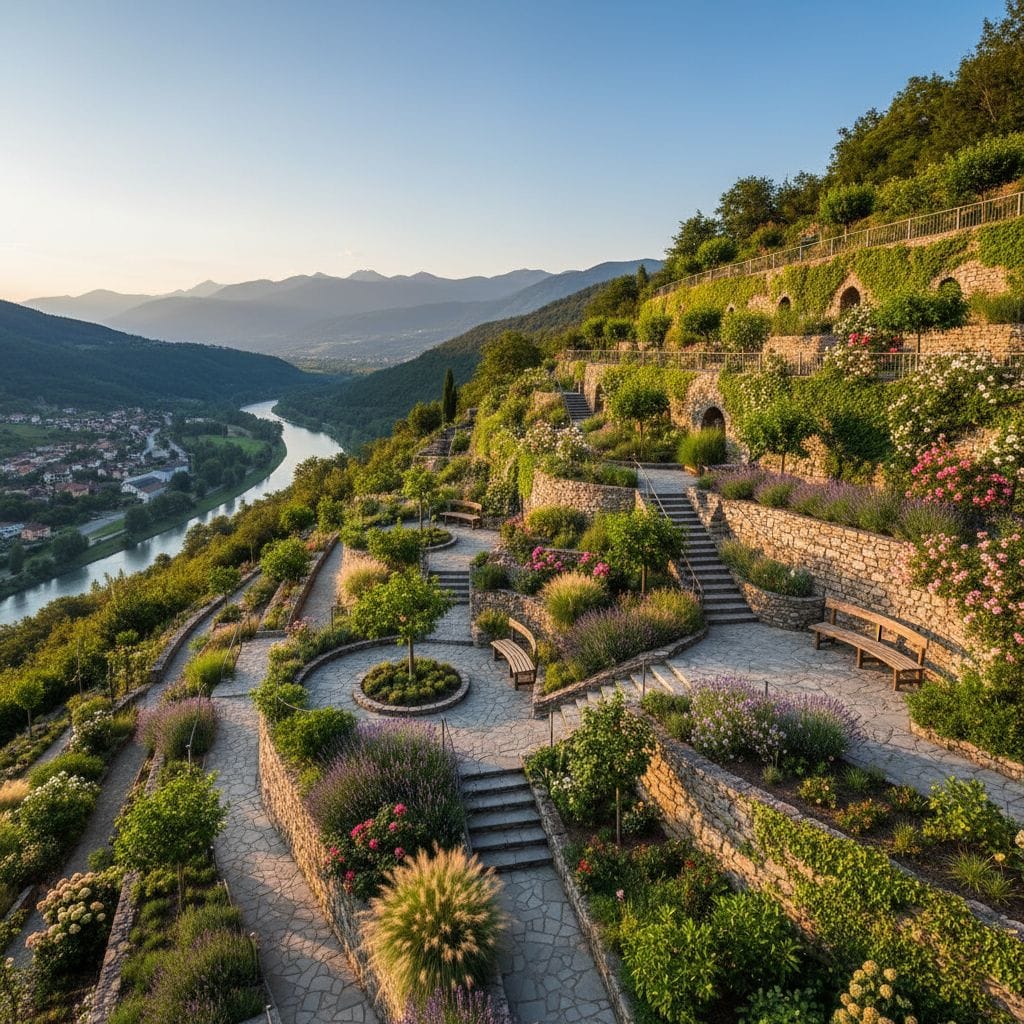
Creating a garden on a sloped terrain opens up exciting possibilities to craft layered outdoor spaces that showcase beautiful views while balancing practical use. By thoughtfully shaping and planting, you can convert an otherwise challenging incline into a series of inviting terraces and paths that encourage exploration and relaxation.
Designing Functional Terraces and Scenic Routes
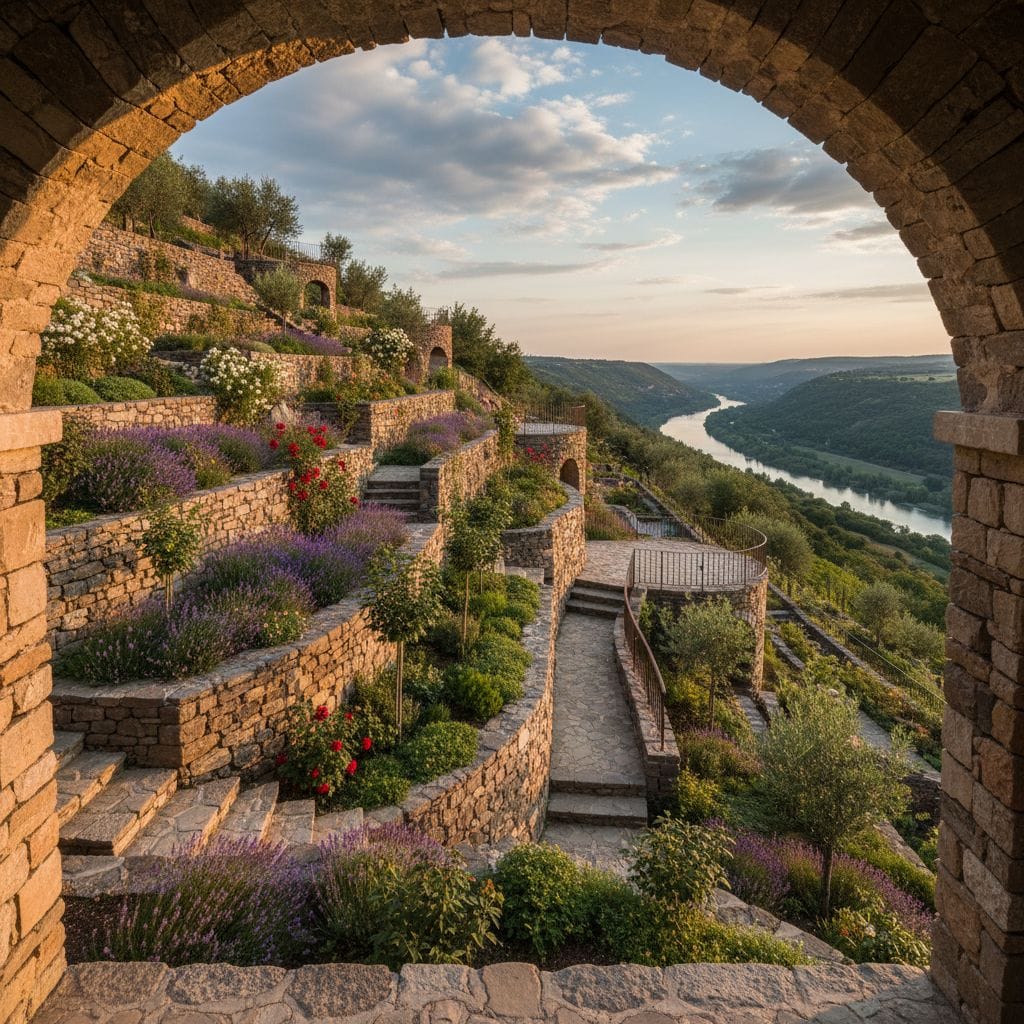
One of the most effective ways to work with a slope is to introduce terraces using retaining walls crafted from natural stone or concrete. These flat platforms not only tame steep sections but also create valuable outdoor rooms perfect for patios, seating areas, dining spaces, or garden beds. This technique, emphasized by landscaping experts at Homes and Gardens, helps break up the hillside while offering multiple vantage points to appreciate the surrounding landscape.
Navigating a sloped garden becomes part of the experience through thoughtfully designed walkways and stairs. Paths often zigzag following the land’s natural contours, making uphill journeys more comfortable and visually engaging. These routes provide spots to pause and admire shifting perspectives, allowing visitors to enjoy the garden from a variety of levels. Such landscape planning is highlighted by Qalandscaping for enhancing both accessibility and the journey through the garden.
Plant Selection and Soil Stability on Slopes
Besides structural modifications, plant choice is crucial for slope stabilization and aesthetic appeal. Incorporating native, deep-rooted plants like perennials, shrubs, and groundcovers helps anchor soil, reducing erosion risks. Designers at Gardens Illustrated advise selecting species adapted to moisture variations across a slope—moister conditions near the base and well-drained, drier soils uphill. This approach not only secures the hillside but also celebrates seasonal blooms and biodiversity.
Raised garden beds on terrace levels are practical additions that improve planting opportunities, enhance drainage, and ease maintenance. Accessible via stepping stones or shallow steps, these beds invite cultivation of vegetables or ornamental plants without overwhelming retaining structures, as noted by Reedy River Landscapes.
Additional techniques such as brush mattressing—laying staked branches to slow water runoff and support new plantings—combine traditional erosion control with ecological benefits. Ornamental grasses also add texture and interest throughout the year, contributing movement and softness to the harder stone and concrete elements of the terrace walls.
Designers often focus on maintaining sightlines from key vantage points like the house by employing shallower terraces and naturalistic planting, avoiding tall walls or railings that could block views. This thoughtful balance creates inviting multi-level “rooms” for various uses, from entertaining to quiet contemplation, sometimes enhanced with focal points such as fire pits or water features.
If you’re considering how to visualize your own sloped garden project, it’s worth trying digital tools designed to simulate terrain and planting options. Platforms like AiGarden can help you experiment with layouts and plant palettes tailored to hillside conditions, guiding your decisions with real-time feedback.
Transforming a sloped garden into a captivating outdoor retreat requires marrying practical earthworks with plant science and aesthetic flow. When designed carefully, the results offer not only functional space but also a dynamic visual journey that changes with every step.
Sources used: Homes and Gardens, Qalandscaping, Gardens Illustrated, Reedy River Landscapes