

English-style gardens are renowned for their charm and sense of discovery, largely thanks to winding paths that guide visitors through enchanting, asymmetrical landscapes. These serpentine walkways invite exploration, creating moments of surprise as they disappear around garden corners, through vine-covered arbors, or between freely spilling plants. This design approach draws inspiration from historic sites such as Sissinghurst Castle and Hidcote, where paths play a central role in shaping the garden experience.
The Art and Function of Winding Paths in English Gardens
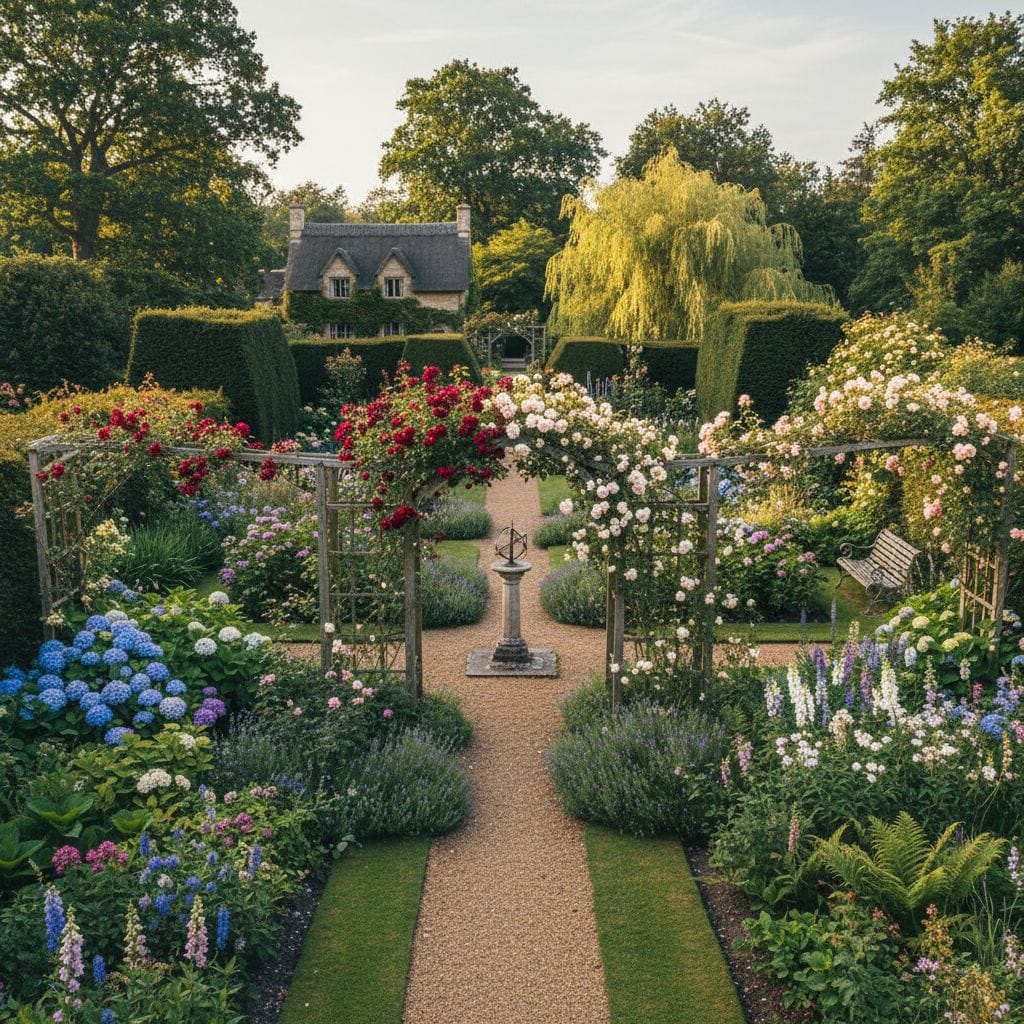
In English garden design, winding paths are not just beautiful but also practical. They connect different garden zones while preventing lawn wear by directing foot traffic away from grass areas. This is especially important during rainy conditions, ensuring access without damage. Materials typically include gravel, which offers good drainage and suits informal styles; mown grass for soft, casual trails; and stone or brick for more structured edges. These hard surfaces are often framed with bricks, metal edging, or low hedges such as boxwood, which effectively contain loose materials and maintain a tidy appearance.
The winding layout serves multiple aesthetic functions. By curving through borders filled with layered perennials like lavender, catmint, foxgloves, and ornamental grasses, the paths create a sense of intimacy and depth. These plants often cascade over edges onto the paths, blurring the line between walkway and planting bed, which enhances the naturalistic, immersive feel typical of English gardens. Narrow paths emphasize this closeness, making garden spaces feel more expansive and engaging, while broader paths accommodate practical needs such as pushing wheelbarrows or social garden strolls. Designers also vary path widths and slopes carefully to manage drainage and adjust walking rhythm, with subtle cross-falls on paved surfaces to prevent water pooling.
Contemporary Trends: Cottage Garden Influence and Sustainability
Modern garden design, including the cottage garden trend highlighted for 2025, carries forward the tradition of winding paths but places stronger emphasis on ecological and sustainable principles. Gardens favor native plants that support biodiversity, spilling exuberantly over loosely edged borders for a more “wild” character that still feels thoughtfully curated. Pathways often use natural materials like gravel or stone to anchor the planting without overwhelming it. Low hedges made from inkberry holly or boxwood gently define space without imposing strict formality, encouraging a “controlled chaos” where flowers freely reseed and naturalize.
Visual cohesion is maintained through repetition of color schemes and plant textures, such as grouping upright foxgloves or aromatic catmint along paths. Designers recommend integrating features like rose-covered arbors or naturalistic ponds linked by these winding routes to create layered moments of interest and varying garden “rooms.”
For gardeners looking to incorporate these ideas, leveraging design tools like AI Garden Design can offer personalized inspiration in planning harmonious paths and borders that reflect English garden charm while embracing modern ecological priorities.
Exploring the thoughtful balance of function and aesthetics in English garden paths reveals how carefully crafted winding trails enhance both the beauty and usability of outdoor spaces. These pathways invite visitors to slow down, discover, and enjoy gardens in an intimate, natural way.
Sources used: Veranda.com, GardenTours.com, BBC Gardeners' World Magazine, Gardens Illustrated