

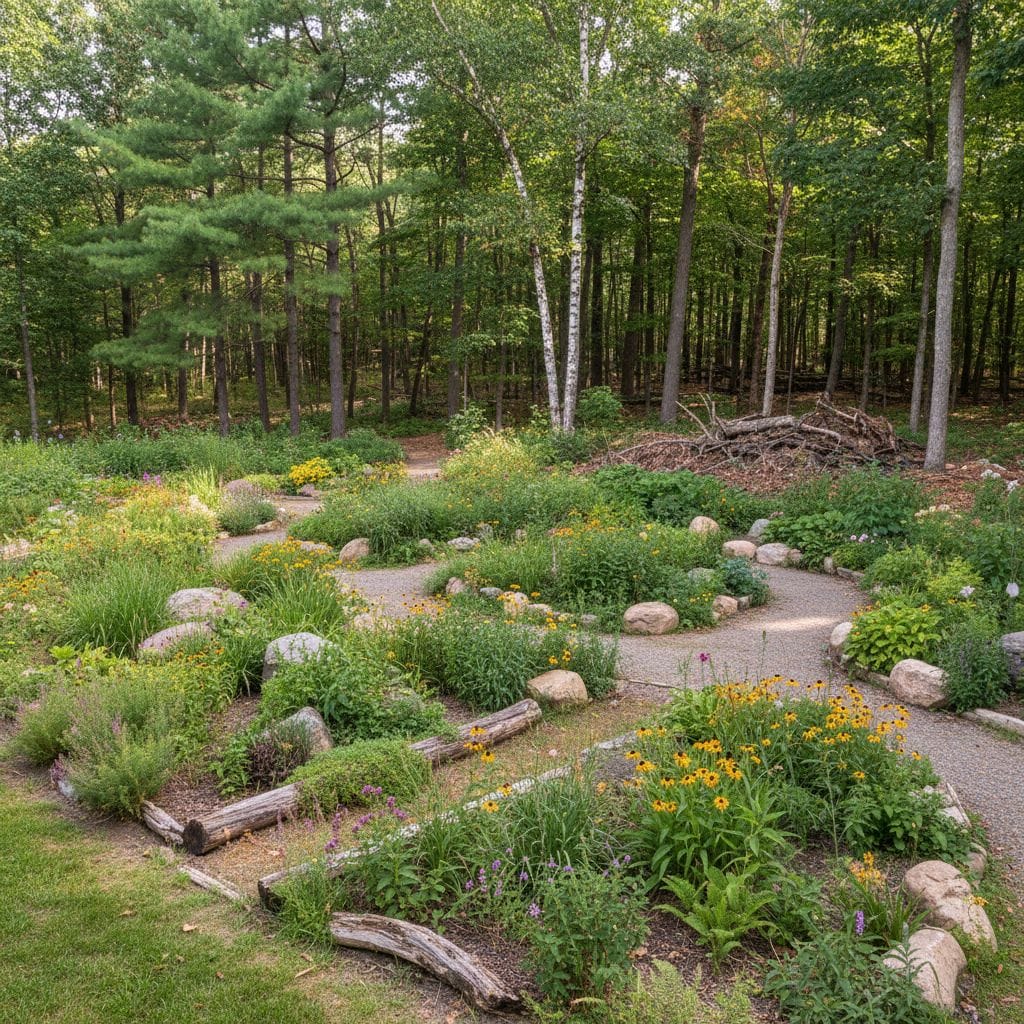
Designing a garden at the forest edge offers a unique opportunity to create a space that naturally merges with its woodland surroundings. These gardens embrace the seamless transition from cultivated spaces into wild nature, prioritizing ecological harmony and resilience over strict formality.
Connecting Garden and Forest: Key Design Principles
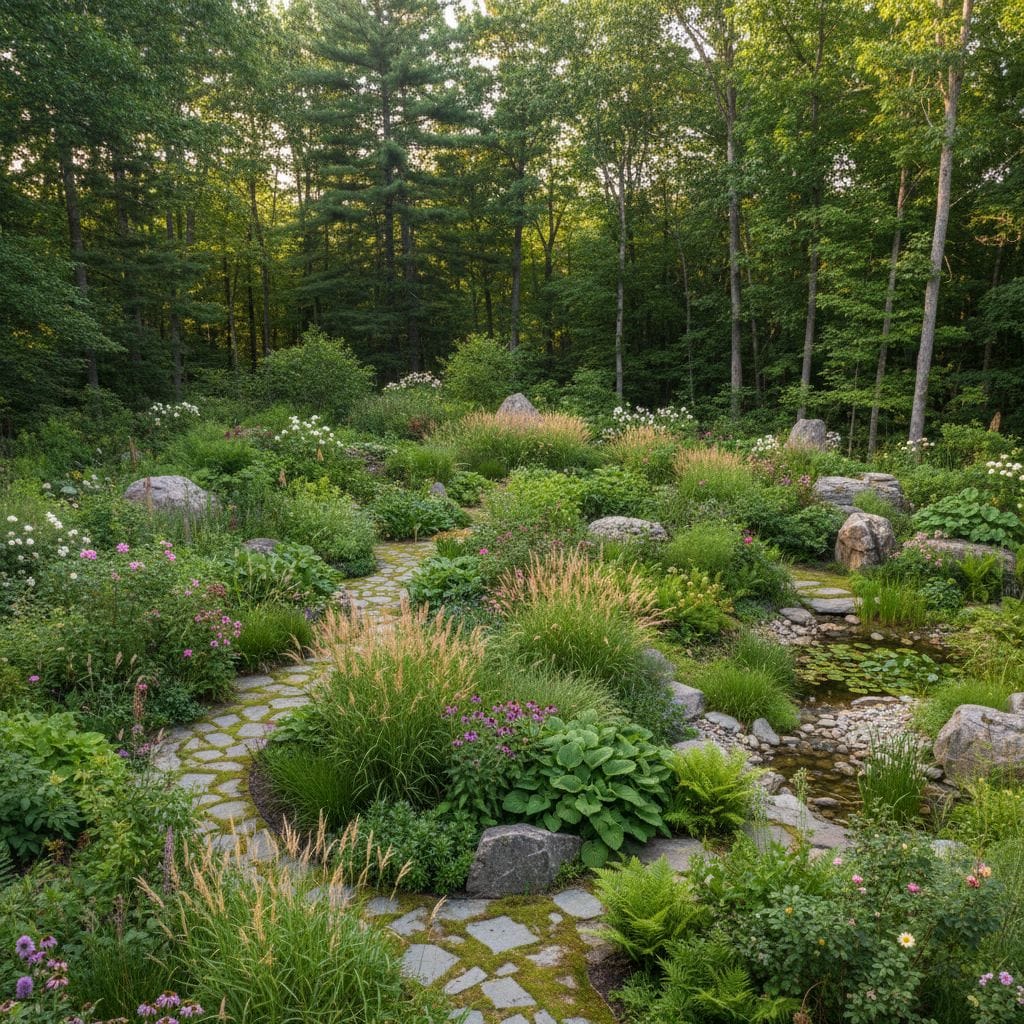
One essential strategy for garden design at the forest margin involves shaping boundaries so they flow naturally into the landscape’s contours. Unlike rigid, geometric layouts, the edge of the garden should move diagonally across the terrain, reflecting the irregular patterns found in ecosystems where different habitats intersect. This approach, detailed in the forest edge design guidelines from Forestry.gov.scot, helps gardens avoid the artificiality of sharp angles and straight lines, creating a more authentic interface with the surrounding woodland.
A layered planting style—drawing inspiration from natural forest structures—is also fundamental. Using a vertical stratification of canopy trees, shrubs, and groundcovers imitates woodland succession, promoting biodiversity and ecological stability. In particular, choosing native species combined with prairie-style grasses and pollinator-friendly wildflowers supports wildlife while increasing resilience to climatic stresses like drought or heavy rains. These trends align closely with the garden design ideas emerging for 2025, as highlighted by Amagard.com, which emphasize sustainability, wildlife habitat creation, and low-maintenance aesthetics.
Soil health and minimal intervention are other cornerstones of forest edge gardens. Instead of relying on synthetic fertilizers and pesticides, incorporating nitrogen-fixing plants and using mulches fosters natural nutrient cycling and moisture retention. Such practices contribute to a garden that thrives in harmony with its local environment while reducing upkeep demands.
Visual and Ecological Integration through Natural Elements
Designs around forest edges often include gravel or minimalist garden components that enhance drainage and introduce striking natural textures. For example, feature trees like pines placed among prairie grasses can introduce an interplay of shadow and openness, reinforcing the forest’s drama without overwhelming nearby native vegetation. This technique allows water to flow gently along contours while maintaining accessible paths and refuse artificial boundaries.
Projects like the Forest Edge Garden documented at Architectureau.com provide excellent real-life examples where cultivated planting zones gradually merge with regenerating forest patches. These plantings use locally sourced wildflowers and adapt to local conditions, such as unexpected wildlife activity, demonstrating how a garden can evolve alongside nature over time.
Further transitions between human-used garden areas and wild forests can be enhanced with informal hedgerows, grassy buffers, or planted edges that soften the boundary without clear separation. These elements help maintain ecological corridors, supporting pollinators and other species while producing a visually unified and calming space.
If you’re inspired to craft a garden that works with natural forest dynamics, tools such as AI Garden Design can be invaluable. They assist in planting selection and layout planning that respects local ecology and landscape form, helping to realize nature-integrated garden concepts effectively.
Crafting a garden at the forest edge therefore calls for a mindful interplay of natural formation, plant choice, and sustainable care. The result is a dynamic, evolving space where the garden and woodland meet fluidly, offering both beauty and ecological value.
Sources used: Forestry.gov.scot, Architectureau.com, Amagard.com