

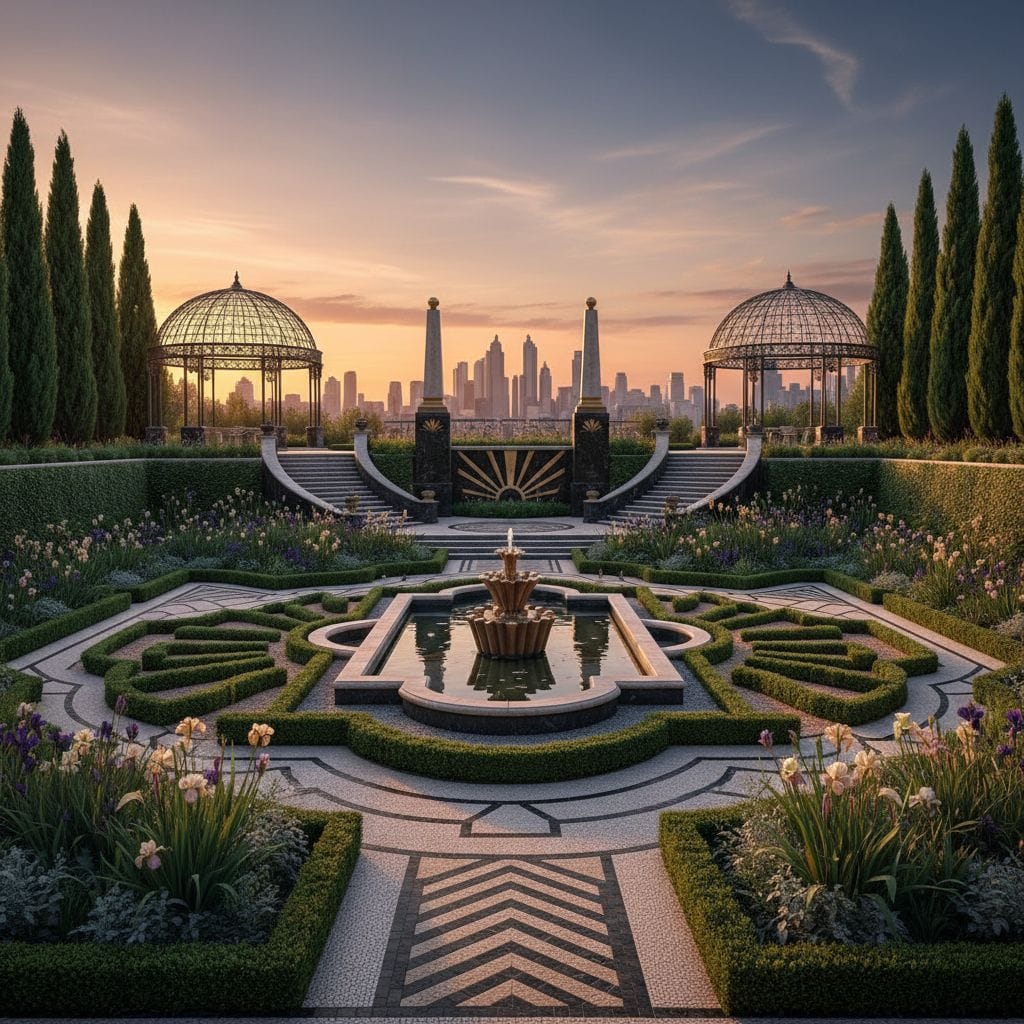
Garden spaces are increasingly becoming reflections of sophisticated design trends, and the Art Deco garden style is making a notable comeback in 2026. Marked by its bold geometry and luxurious materials, this style transforms outdoor areas into elegant, harmonious extensions of the home environment.
The Core Elements of Art Deco Garden Design
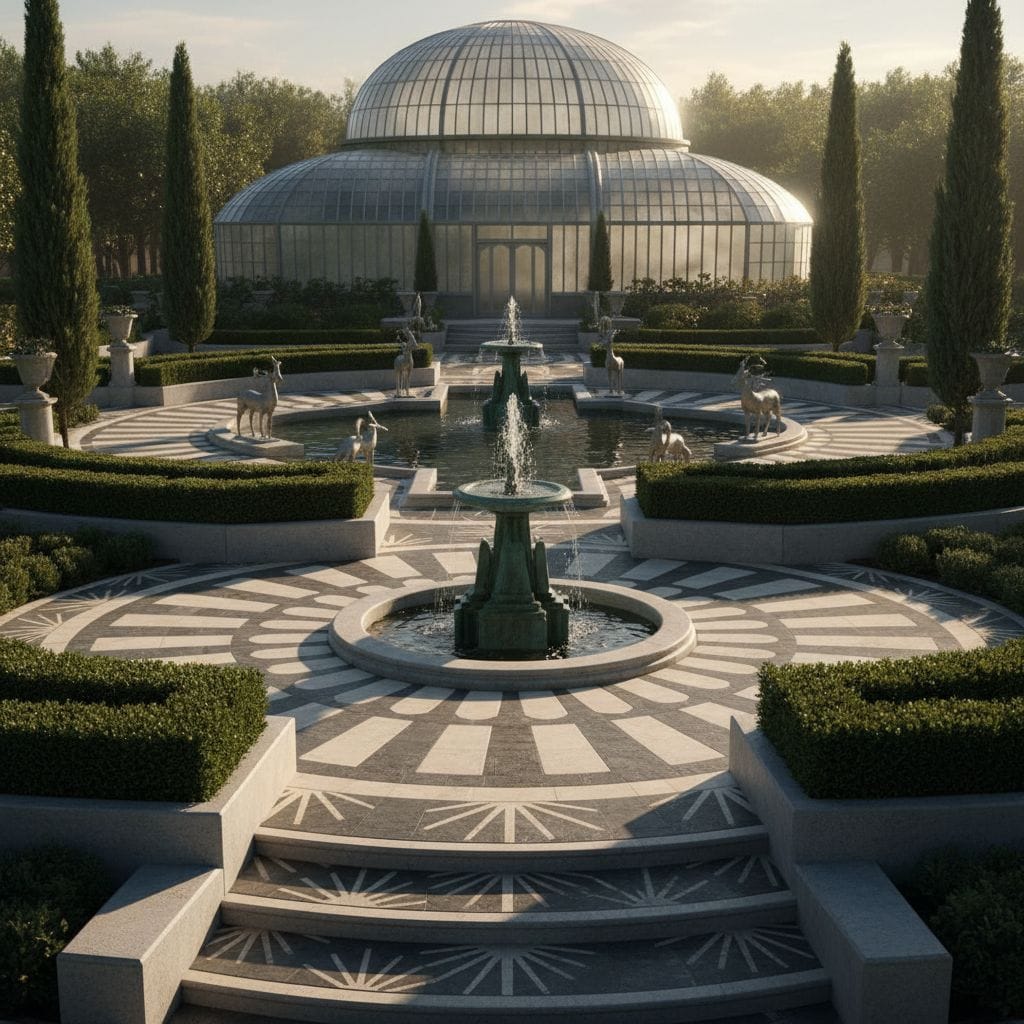
Art Deco gardens stand out with their striking geometric arrangements and symmetry. The design typically relies on strong linear pathways and meticulously planned layouts featuring shapes such as concentric circles and sharp angles. These elements create a highly structured outdoor setting that balances visual drama with classical elegance.
Materials play a crucial role and are carefully chosen to reinforce the style’s opulence. Surfaces made from grey or black porcelain paving and slate add depth and sophistication, while polished stone and stainless steel planters offer a refined, tactile contrast. These material choices contribute directly to the perception of a high-end, curated garden space.
Planting within Art Deco gardens is equally deliberate. The use of sculptural plants and statement focal points—like eye-catching water features—helps to punctuate the geometry without compromising the clean, linear feel. Lighting also enhances the experience, strategically placed to highlight shapes and textures both during the day and after dusk, intensifying the garden’s visual impact.
Modern Takes on a Classic Style
While traditional Art Deco gardens embrace formal symmetry and detailed hardscaping — including curved patios, patterned paving, ironwork gates, and carefully clipped hedges — contemporary versions blend these elements with a more layered planting approach. This fusion accommodates modern sensibilities, promoting an outdoor space that feels both glamorous and inviting.
This trend toward structured yet functional garden design reflects a growing desire among homeowners to create clearly defined, purposeful outdoor living areas. The emphasis is not solely on appearance but also on practical elegance—spaces meant to be enjoyed daily, whether for relaxation or social occasions.
For those interested in exploring this style further or experimenting with Art Deco garden layouts, digital tools can be valuable resources. Platforms like AiGarden design offer intuitive visualizations and planning assistance to bring these geometrically rich and aesthetically refined concepts to life.
Garden design inspired by Art Deco continues to captivate with its balance of bold structure and ornamental grace, proving timeless elegance is achievable in the landscape. For more detailed insights and examples of this trend, visiting platforms like the Houzz 2026 home design predictions on Austin CultureMap or the Gendhis Garden YouTube channel offers practical inspiration and guidance.
Sources used: Austin CultureMap, Gendhis Garden, ED Gardens, Strutt & Parker Guides